MY Work

NextBreath App

Mobile App UX/UI design

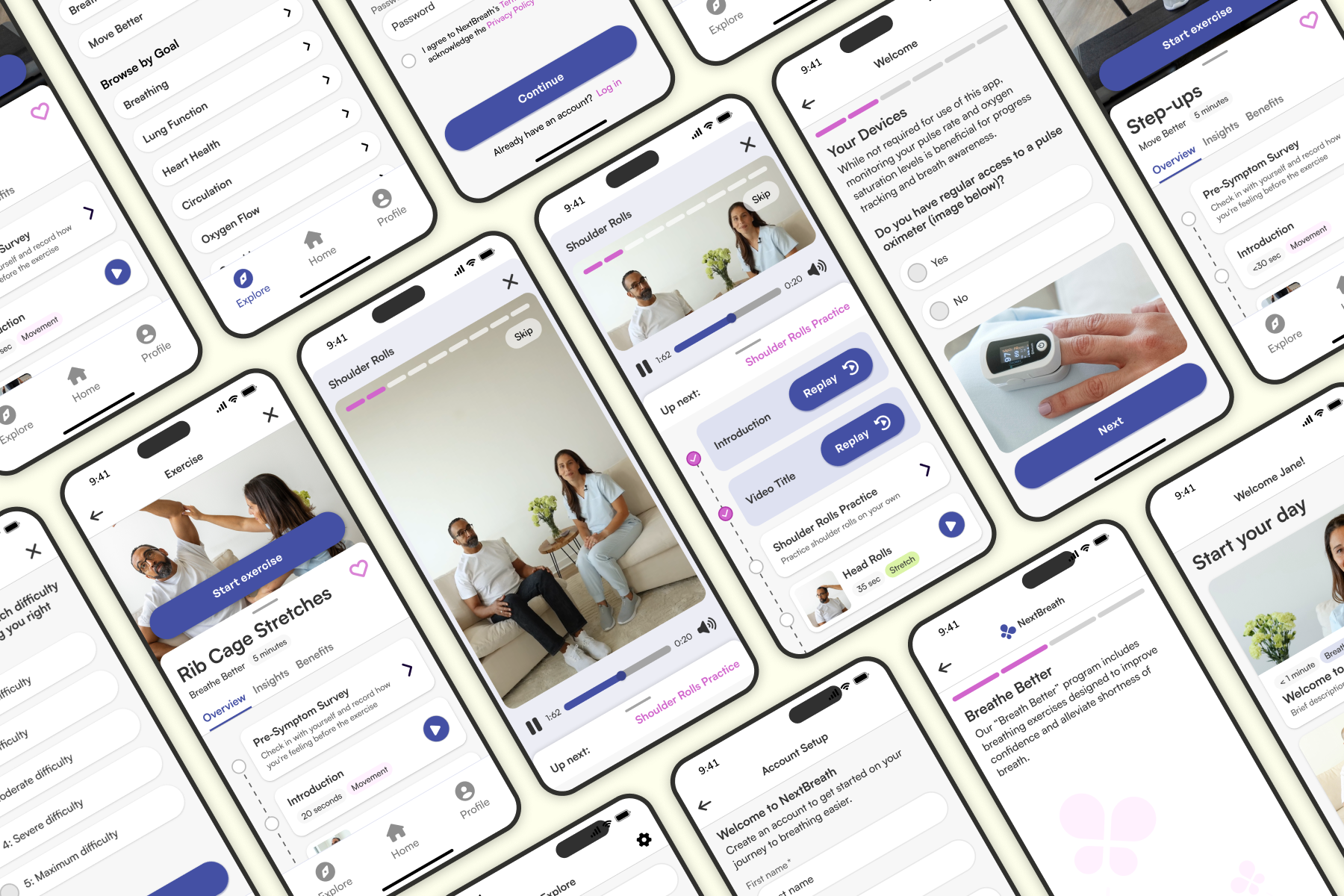
NextBreath is a digital health application designed to support individuals with chronic cardiopulmonary disease through research-backed breathing, movement, and mental health exercises. The goal of the app is to translate complex clinical research into an accessible, user-friendly mobile experience that patients can realistically incorporate into their daily lives.

Note: Specific functionality and visuals are not publically available.
My Role

  1. Led end-to-end UX/UI design of a healthcare mobile application
  2. Translated clinical research into intuitive, accessible product experiences
  3. Conducted user research and testing with COPD patients
  4. Created and iterated on wireframes and high-fidelity prototypes
  5. Oversaw creative direction across the app, exercise videography, and supporting materials
  6. Collaborated closely with developers, medical researchers, and stakeholders

The Goal

The research team behind NextBreath had strong clinical evidence showing the benefits of breathing, movement, and mental health exercises for patients with COPD, but no clear product experience to deliver that research at scale. I was brought on to transform early ideas and rough wireframes into a usable, accessible mobile app that could support patients, researchers, and future clinical studies.

The Approach

I began by creating an initial Version 1 prototype based on early concepts from the founding team. This prototype focused on validating core interactions and overall structure rather than full functionality.

To better understand the target users, I conducted preliminary user testing with COPD patients and attended in-person breathing workshops. These experiences helped inform design decisions around pacing, clarity, accessibility, and cognitive load.

As the product evolved, I worked closely with the research team to translate clinical workflows into flexible, user-centered flows that fit naturally into daily routines. This included advocating for shorter interactions, clearer progression cues, and designs that reduced physical and mental strain for older users.

Key Challenges & Decisions

Bridging clinical research & real-world usability

Each section was designed to clearly communicate how BrightMove supports recruiters at every stage, with dedicated pages highlighting relevant features and capabilities. To make these features easier to understand, I designedfocused Figma prototypes that visually demonstrated specific tool interactions without the complexity of the full product interface. These prototypes allowedthe story of each feature to be clear, concise, and visually engaging.

Designing for accessibility and an older audience

Given that the majority of COPD patients are in their 70s, accessibility was a primary design driver. To best serve this user base, I implemented larger typography and touch targets, clear step-by-step progression, strong visual hierarchy, and frequent orientation cues to help users understand where they were and what came next. User testing played a critical role in validating and refining these decisions.

Shaping Video content for mobile use

The original exercise scripts were lengthy, often exceeding ten minutes per video. I proposed a new structure with significantly shorter videos and separated introductions from the exercises themselves. I edited scripts, collaborated with the video team, oversaw filming, and integrated the final content into the app experience.

Outcome & Current Status

The result was a private beta version of the NextBreath app used by the internal team for research and investor demonstrations. The app successfully translated clinical exercises into an approachable, mobile-friendly experience and influenced how the research team thought about patient engagement. The official product launch date will be determined by clinical and research stakeholders.